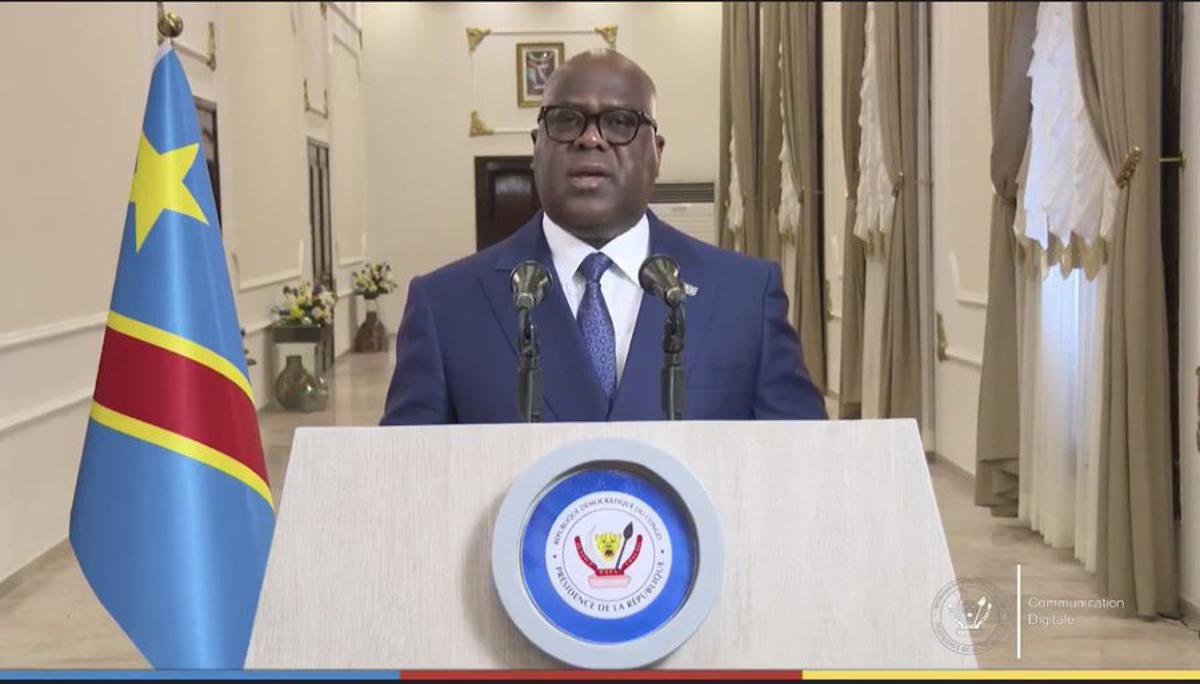
The President of the Democratic Republic of the Congo, Félix-Antoine Tshisekedi, officially promulgated the law establishing the conditions for organizing a referendum in the country. The presidential decree regarding this text was read on Tuesday, November 10, on the airwaves of the Congolese National Radio and Television.
Previously adopted by the National Assembly and the Senate, this text defines the legal framework governing popular consultations. It notably broadens the possibilities of resorting to a referendum by providing that the people may be called upon to decide on a draft for a new Constitution or on the modification of certain existing constitutional provisions when circumstances require.
The new legislation also specifies the various ways to initiate such a consultation. The initiative may come from the Head of the Government, the Government, at least half of the members of each of the two chambers of Parliament, or even from citizens through a petition complying with current legal criteria.
Furthermore, the law regulates the conduct of the referendum campaign, the organization of the vote, the proclamation of results, and the procedures for appeals before the competent jurisdictions.
However, this reform has sparked divergent reactions within the Congolese political class. While its supporters present it as a tool to strengthen participatory democracy, its detractors fear that it may pave the way for controversial constitutional amendments.
With its promulgation by President Tshisekedi, the law has immediately entered into force and now constitutes the legal framework governing the organization of referendums in the DRC.
With Okapi


