Kinshasa — The Manassé Lomboto case has taken a new turn. As relatives of the young activist from ADD Congo and member of opposition figure Prince Epenge’s security team were preparing to organize his funeral, the Congolese justice system ordered that his remains remain at the morgue of the Cinquantenaire University Hospital, pending further investigations into the circumstances of his death.
The case is now marked by several questions, particularly regarding the exact circumstances of the young man’s death, as well as his family identity and the people legally entitled to claim his remains.
The revelations attributed to Mills Tshibangu
In a report focusing on the case, investigative journalist Mills Tshibangu presents several elements which, if confirmed by official documents or a judicial investigation, could alter the understanding of the case.
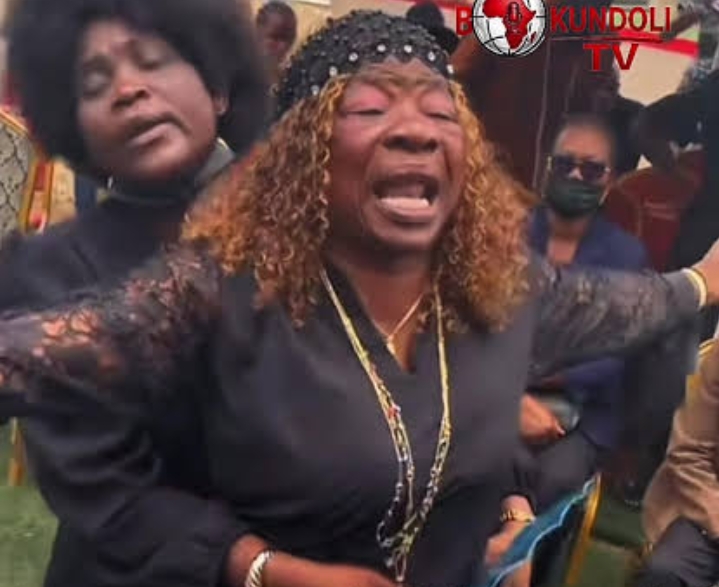
According to the account reported by the journalist, Manassé Lomboto is said to have been orphaned by his mother at the age of five. Mills Tshibangu claims that the woman publicly presented as his mother during the events surrounding the claim of his remains was not his biological mother.
According to the same account, Manassé’s biological mother died while he was still a child after allegedly being subjected to domestic violence. Young Lomboto was subsequently raised within the family of General Etumba.
These elements, however, remain allegations attributed to Mills Tshibangu and need to be documented and independently verified. At this stage, none of the sources consulted makes it possible to regard them as definitively established facts.
Woman claiming the body at the center of questions
The presence of a woman presented as the deceased’s mother during the procedures surrounding the funeral has therefore triggered a new controversy.
In his analysis, Mills Tshibangu questions her biological relationship with Manassé Lomboto and raises questions about why this woman allegedly claimed the body.
The journalist goes as far as raising the possibility of a “scam,” a characterization that belongs to him and which, at this stage, cannot be presented as a judicial conclusion.
The key question therefore remains the identity of the person legally recognized as a relative or as having the authority to claim the body. Civil-status documents, birth certificates, testimony from family members and, where applicable, the findings of a judicial investigation could help clarify the matter.
Why does the justice system want to keep the body?
This controversy comes as the Kinshasa/Kalamu High Court prosecutor’s office ordered that the remains be kept at the Cinquantenaire morgue until the investigations are completed.
The decision prevented the release of the body scheduled for September 26, while relatives and C64 leaders had already gathered for the funeral. The continued retention of the body caused tensions at the hospital and angered opposition activists.
According to Prince Epenge, Manassé Lomboto was a victim of the violence that occurred during the C64 march on September 15 in Limete. ADD Congo and C64 have called for an investigation to establish responsibility for his death.
According to statements reported by several media outlets, Lomboto was allegedly injured during the clashes before being taken to Olympic Hospital, where he died that evening. The precise circumstances of his death are precisely what the investigation is intended to establish.
Olympic Hospital, another point of questioning
Mills Tshibangu is also examining the location where Manassé Lomboto was reportedly taken following the violence and where his death was reportedly confirmed.
Several media outlets have indeed reported that the death occurred at Olympic Hospital. However, the fact that the facility is mentioned in the deceased’s medical journey does not, by itself, allow any conclusion to be drawn about the circumstances of his death.
This is precisely why the justice system’s decision to retain the body could help establish, particularly through medical evidence and potentially an autopsy, the exact nature of the injuries, their origin and whether they were connected to the violence of September 15.
A case now at the crossroads of politics, justice and family truth
The Manassé Lomboto case now lies at the intersection of three questions: the circumstances of his death, possible responsibility for the violence of September 15, and the identity of the people legally entitled to present themselves as members of his family.
The opposition’s version attributes his death to violence committed during the demonstration. The prosecutor’s office, meanwhile, considers it necessary to continue the investigation before allowing the burial. This position was also publicly defended by Augustin Kabuya, who called for the exact cause of death to be established and questioned the circumstances surrounding the handling of the body after the violence.
Mills Tshibangu’s revelations therefore add a new dimension to the case: Who was Manassé Lomboto really? Who are his biological relatives, and under what exact circumstances did he die?
These are questions to which only a documented, adversarial and independent investigation can provide definitive answers.
Rédaction