When Emotion Obscures Geopolitics
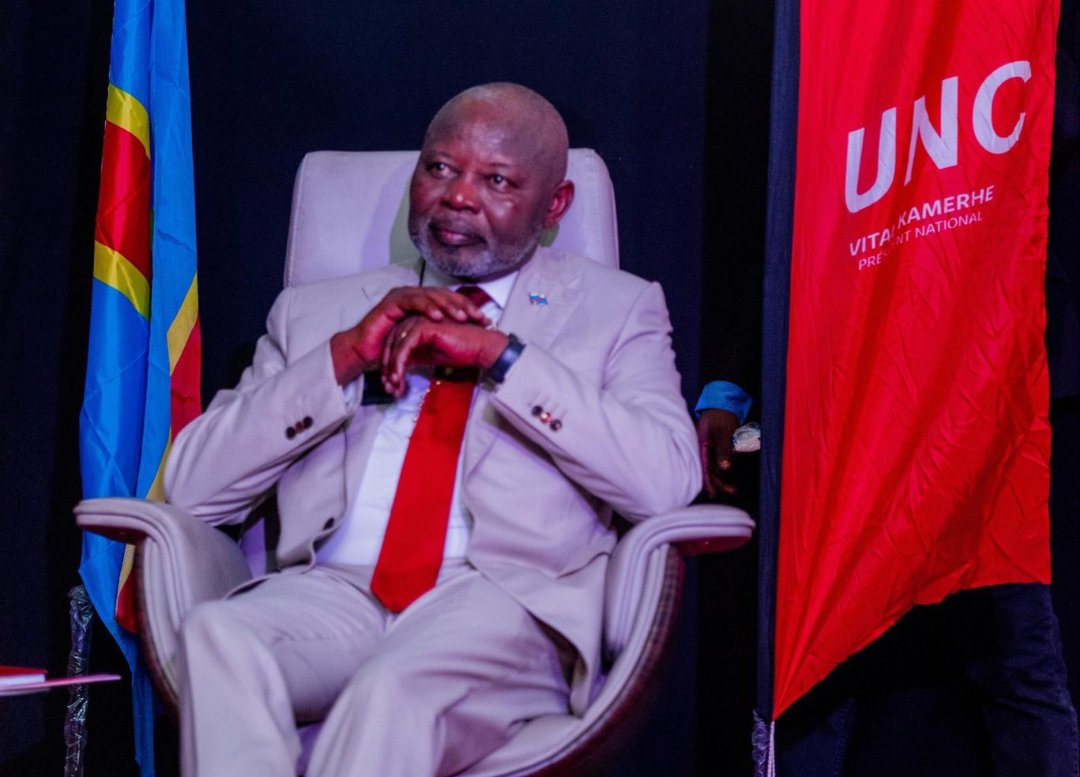
Vital Kamerhe’s statement on the war in the eastern Democratic Republic of the Congo deserves scrutiny beyond its apparent wisdom. By asserting that “for those of us in Kinshasa, for those who have never lived through war, it’s easy to say: tobunda kaka,” the Speaker of the National Assembly raises a legitimate question about the human cost of conflict. Yet his reasoning also seems to revive a long-standing divide between the east and west of the country—a framing that calls for serious nuance.
No one can reasonably trivialize the suffering of people in Goma, Bukavu, Rutshuru, Masisi, Bunagana, and other territories scarred by decades of violence. Those living under shelling, forced displacement, massacres, and permanent insecurity know better than anyone what war means. Still, that does not mean people living in Kinshasa, in the west of the country, are indifferent to their compatriots’ fate or are urging hostilities to continue out of simple ignorance.
Above all, the debate must not be reduced to a geographic opposition. For more than thirty years, the eastern Congo has borne the brunt of conflicts whose roots extend far beyond internal rivalries. Rwanda’s interventions and territorial ambitions—regularly denounced by Kinshasa and documented across various international reports—form a central dimension of this tragedy. The issue, then, is not simply whether Congolese people want war or peace, but under what conditions a lasting peace can be achieved without surrendering territory or sacrificing national sovereignty.
Moreover, the DRC’s recent political history shows that several rebellions that destabilized the country were led by figures from the east. Obviously, that cannot hold residents of that part of the country responsible for the politico-military adventures of some of its sons. Yet this reality serves as a reminder that Congolese crises cannot be explained by a simplistic contrast between a suffering east and a west that supposedly does not understand.
Furthermore, insofar as the DRC has resisted multiple attempts at fragmentation so far, it is also thanks to mobilization across its national components—including those in the west—that refused to let the country break apart. National solidarity cannot be a one-way street.
The real danger may lie elsewhere: in this succession of wars and rebellions that ends up locking the Congolese population into permanent exhaustion, while political and military actors vie for power, weaken institutions, and gradually erode the country’s defense capacities. With every new rebellion, Congolese citizens pay a heavy price while political calculations frequently take precedence over the national interest.
Vital Kamerhe is right on one count: a new strategy is needed to end this war. But that strategy must not be confused with national resignation—still less with the notion that demanding the defense of territorial integrity is synonymous with wanting to prolong civilians’ suffering.
The real question, therefore, is not choosing between war and peace. It is how to secure a peace that is neither capitulation nor another political deal struck at the expense of eastern communities. For the Congolese do not want to wage war forever, nor do they want to be condemned to endure indefinitely the fallout of their neighbors’ expansionist ambitions and their own leaders’ calculations.
Editorial Board