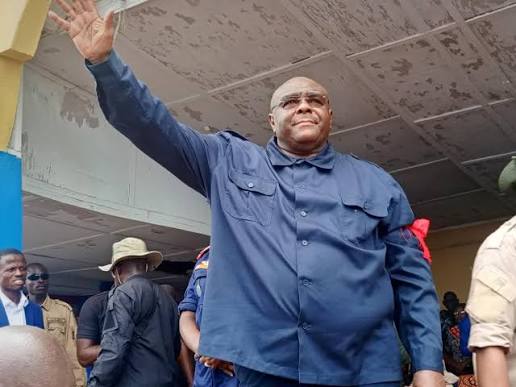
In a reaction published on social media, Deputy Prime Minister and Minister of Transport Jean-Pierre Bemba sharply criticized former President Joseph Kabila. Between accusations of electoral fraud, reproaches related to the war in the East, and a defense of Félix Tshisekedi’s record, this outburst revives the political confrontation between the two camps.
The reaction was not long in coming. The day after Joseph Kabila’s speech, Jean-Pierre Bemba stepped up to contest the remarks of the former Congolese head of state. In a particularly scathing message, the minister accuses him of trying to lecture the Congolese after his eighteen years spent leading the country.
“Your speech fools no one,” Jean-Pierre Bemba launches right in the first lines of his message, in which he calls into question the former president’s political legitimacy and accuses him of having left behind a legacy marked by violence, looting, and impunity.
“An impostor and a usurper”: Bemba attacks Kabila’s legitimacy
One of the minister’s main lines of attack concerns the conditions under which Joseph Kabila came to and maintained himself in power.
Jean-Pierre Bemba notably accuses him of having fraudulently won the 2006 presidential election and of not having been genuinely elected by the people in 2011. These are serious accusations that the former president could contest, but which the minister presents as facts illustrating, in his view, the illegitimacy of the previous regime.
For Bemba, Kabila’s speech amounts to an attempt to rewrite the country’s political history. He believes that the Congolese must not forget the violence and human rights violations recorded during this period.
To support his argument, he cites notably Floribert Chebeya, Armand Tungulu, Luc Nkulula, Thérèse Déchade Kapangala, and Rossy Mukendi Tshimanga, several figures associated with cases of violence, repression, or violations of fundamental rights in the DRC.
This reference to the victims gives a memorial and political dimension to the confrontation between the two men.
The shadow of Rwanda and the war in the East at the heart of the accusations
Beyond Joseph Kabila’s political record, Jean-Pierre Bemba places the issue of national sovereignty at the center of his response.
The minister accuses the former president of having maintained ties with Kigali and of having contributed to maintaining foreign influence within Congolese institutions. He goes further by attributing to him support for the M23 and the AFDL, as well as responsibility for the security and military difficulties faced by the country.
These accusations, particularly sensitive in the context of the security crisis in the eastern DRC, are formulated by Bemba in his message and must not be confused with established judicial conclusions.
For the minister, Joseph Kabila’s return to the political debate cannot be dissociated from the issue of Congolese sovereignty. He rejects any prospect in which the DRC would be subjected to the interests of a neighboring country.
“Congo will never be a province of Rwanda,” he asserts, before hammering home that national sovereignty cannot be the subject of negotiations in Kigali or elsewhere.
Félix Tshisekedi presented as the political turning point
In his response, Jean-Pierre Bemba also contrasts Joseph Kabila’s presidency with that of Félix-Antoine Tshisekedi Tshilombo.
The minister highlights several achievements attributed to the current government, notably free primary education, free maternity care, the increase in the state budget, as well as the construction and rehabilitation of university, road, airport, port, and railway infrastructure.
Through this comparison, Bemba intends to defend the record of the current administration and support the idea that the DRC has embarked on a new stage in its political history.
However, the achievements he lists deserve to be evaluated in light of verifiable data, notably regarding their financing, implementation, and concrete effects on the population’s living conditions.
This defense of Félix Tshisekedi’s record shows that Bemba’s response is not limited to an attack against his predecessor: it also constitutes a stance in favor of the current power.
The memory of victims invoked in the political debate
Jean-Pierre Bemba’s message ends with a tribute to the Congolese whom he considers victims of the Kabila era. By citing several names, the minister recalls that debates over the former regime go beyond mere questions of power and political strategy.
He concludes his intervention with two highly patriotic formulas: “Never betray the Congo!” and “The homeland or death, with God we shall conquer!”
These slogans give his publication a tone of national mobilization, in a context where issues of security, sovereignty, and political responsibility occupy a central place in the Congolese public debate.
A new escalation in the political arm-wrestling match
Jean-Pierre Bemba’s outburst illustrates the polarization that now surrounds Joseph Kabila’s public statements. By challenging his record, legitimacy, and stance on the security crisis, the minister seeks to place the former president back in front of the controversies that marked his years in power.
It remains to be seen whether Joseph Kabila will directly respond to these accusations or maintain his political line without entering into a personal exchange with members of the current government.
One thing is certain: this confrontation brings issues of historical responsibility, national sovereignty, and the records of successive regimes back to the forefront. These are subjects that continue to divide the political class and challenge Congolese public opinion.
Redaction