The American AI-driven mining exploration firm, backed by Bill Gates and Jeff Bezos, is seeking to deploy an aircraft equipped with a gravity gradiometer in the Democratic Republic of the Congo. The device, equipped with dual-use military technology, is sparking intense tensions among Washington, Beijing, and the United Nations Security Council.
The global race for critical minerals is taking on the air of a technological spy thriller in Central Africa. KoBold Metals, a California-based unicorn valued at $4 billion and backed by billionaires Bill Gates and Jeff Bezos through their venture fund, finds itself thrust into the center of a major diplomatic showdown at United Nations headquarters.
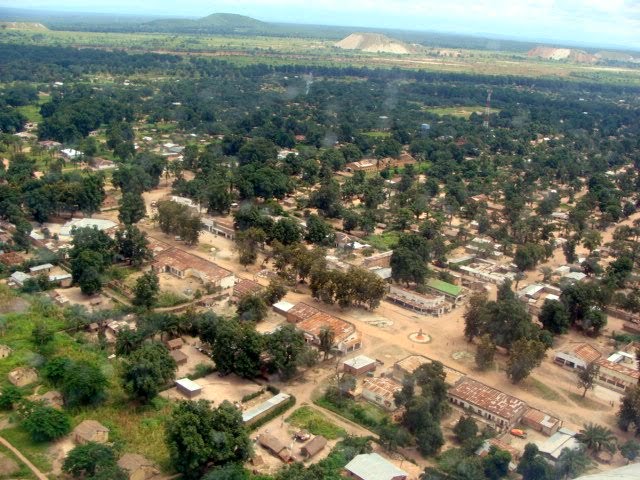
At stake: a $50 million lithium exploration program in the Democratic Republic of the Congo (DRC), specifically targeting the subsurface of the strategic Manono region, where the company holds 14 mining licenses.
A Cutting-Edge Technology with Military Applications
To map the Congolese subsurface without invasive drilling, KoBold Metals plans to fly an aircraft equipped with a tensor gravity gradiometer. This state-of-the-art equipment detects minute variations in the Earth’s gravitational field to identify geological structures rich in lithium and other critical minerals.
However, this surgical-precision technology is classified as dual-use equipment:
- Civil use: Rapid subterranean geological mapping and precise targeting of mineral deposits.
- Military use: Seafloor mapping, high-precision submarine navigation without GPS signals, and stealth target detection.
Due to the arms embargo and sanctions regime imposed by the UN in the DRC, importing and flying this technology over Congolese territory requires a formal exemption from the Security Council’s Sanctions Committee. Within the UN, some diplomats fear these aerial detection capabilities could be diverted or used in the context of regional security tensions and military operations.
Diplomatic Escalation Between Washington and Beijing
Faced with administrative hurdles, the American company sought direct support from the U.S. government. The State Department officially submitted an exemption request to the United Nations to allow KoBold’s contractor to operate on the ground.
In correspondence addressed to U.S. diplomats, KoBold openly voiced concerns over Chinese maneuvers:
“We fear that China is weaponizing the UN arms embargo process to obstruct legitimate American commercial activities in the DRC.”
This American offensive comes amid fierce economic competition: Kinshasa committed to granting preferential treatment to U.S. buyers for production from state-owned mining companies, threatening Beijing’s hegemony over the lithium supply chain. For its part, the Chinese Ministry of Foreign Affairs firmly rejected these allegations, calling them “contrary to the facts.”
A Race Against the Weather Window
For KoBold Metals, every day counts. The company warns that any delay in securing UN authorization will cause it to miss the dry season—the only weather window suitable for aerial surveys. A prolonged diplomatic stalemate would paralyze the entire strategic exploration project for at least another year.
Rédaction