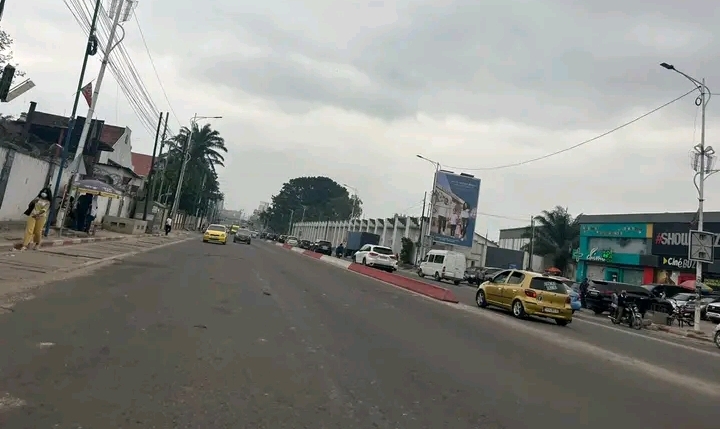
This Wednesday, the Congolese capital presented an unusual sight: that of a metropolis brought to a standstill. The “ghost town” operation, launched by the opposition to denounce the current political climate and fears surrounding a potential third term for President Félix Antoine Tshisekedi, was widely observed. With an estimated success rate of around 80%, the impact on the daily lives of Kinshasa residents was undeniable.
A deserted urban landscape
From the early hours of the morning, the observation was clear. Kinshasa’s usually congested arteries were unusually light. The vast majority of motorists, fearing for their safety or in solidarity with the call to action, chose to leave their vehicles at home.
Schools, normally bustling with activity from dawn, remained closed, depriving thousands of students of classes. While the public administration was an exception—civil servants returning to work under pressure from threats of sanctions from their superiors—the private sector overwhelmingly followed suit. Some private banks and a few businesses also participated.
Between political support and fear of reprisals
Beyond the logistical success of the day, a central question remains: what are the real motivations of Kinshasa residents?
Two interpretations emerge to analyze this urban silence:
*Political commitment: For a significant segment of the population, this movement is a show of strength against the ambitions attributed to President Félix Tshisekedi regarding a possible third term, a highly sensitive issue in Congolese public opinion.
*Fear of violence: Conversely, security concerns also played a decisive role. The opposition, through its appeals, also issued threats against those who dared to take to the streets. This atmosphere of fear led many citizens to stay home, not out of conviction, but out of concern for their physical safety and property in the face of the risk of unrest or urban violence.
A resounding victory for the opposition
For the Congolese opposition, the outcome of this day is undoubtedly a success. By managing to paralyze the country’s nerve center, it sends a strong signal to the government, proving its capacity for mobilization, even in a context of intense security pressure.
However, does this success mark the beginning of a lasting protest movement, or is it just a flash in the pan? The question remains open. While the opposition seems determined to maintain the pressure, the coming days will tell us whether it intends to repeat these actions and whether the population, beyond fear, will be ready to transform this “ghost town” into a genuine lever for political change.
The political future of the DRC seems, in any case, to be unfolding in a period of high tension where every actor, whether in power or in the opposition, is now staking their credibility on the streets of Kinshasa.
Editorial Staff