By Dr Lohanga Konga, Itinerant Ambassador African Archaeologist GEM 🪶 From the Kimbangu Art Research Centre — CRAK
The recognition of Kimpa Vita among the historical figures and heroes of the Democratic Republic of the Congo raises a debate that extends far beyond national borders. Following this initiative, Thomas Luhaka raises a historical question: should the prophetess of the Kongo kingdom, who confronted Portuguese rather than Belgian domination, be celebrated primarily by Angola, where her main historical sites are located?
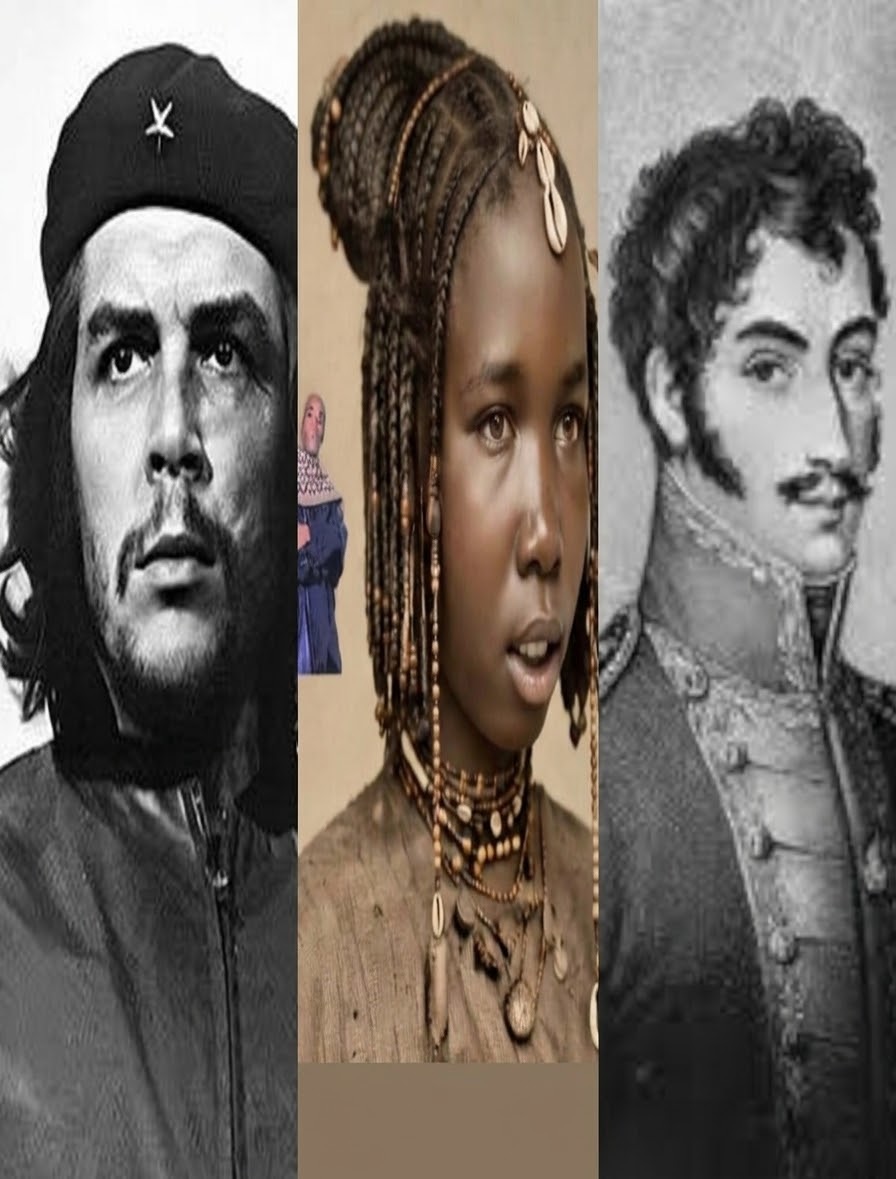
A question that deserves to be confronted with the history of nations and the examples of Che Guevara, Simón Bolívar, and José de San Martín.
The controversy surrounding the elevation of Kimpa Vita among Congolese heroes brings back to the table a fundamental question: to whom does the legacy of great historical figures belong when the current borders of states did not yet exist at the time of their struggle?
In his reaction, Thomas Luhaka highlights several historical considerations. Dona Beatrice, better known as Kimpa Vita, lived in the 18th century, in a context of Portuguese domination and influence over the Kongo kingdom. She therefore never fought against Belgian colonization, which did not yet exist in her time. She was executed on July 2, 1706, long before the creation of the Congo Free State in 1885.
Geographically, her main historical anchor is located in present-day Angola. The city of Mbanza Kongo, the former capital of the kingdom, is today located in the Angolan province of Zaire. It is also in present-day Angolan territory that Kimpa Vita was executed.
These historical elements are undeniable. But do they allow us to conclude that Angola alone would be legitimate in paying tribute to her?
The history of peoples goes beyond the borders inherited from colonization.
Kimpa Vita did not advocate for the creation of contemporary Angola, any more than she fought for a Congolese state within its current borders. Her struggle was part of an ambition to restore the political and spiritual unity of the Kongo kingdom, whose historical territory extended over spaces corresponding today to Angola, the Democratic Republic of the Congo, and Congo-Brazzaville.
Therefore, reducing her legacy to a single contemporary state would amount to projecting current borders onto a political reality that predated them by several centuries.
It must also be recalled that honoring a personality as a national heroine does not necessarily mean that she fought for the current state within its contemporary geographical borders. World history offers several examples of foreign personalities who became emblematic figures of nations to which they did not originally belong.
Che Guevara: an Argentine who became a hero of the Cuban revolution
Born on June 14, 1928, in Rosario, Argentina, Ernesto Che Guevara took part in the Cuban revolution alongside Fidel Castro. After the revolutionary victory, he obtained Cuban citizenship on February 7, 1959, under a special provision granting him the status of a native-born Cuban.
Although he did not originate from Cuba, Che Guevara became one of the most emblematic figures of its revolutionary history. His example demonstrates that geographical origin does not necessarily constitute an impassable border in the construction of national memory.
Simón Bolívar: one man, several nations
The example of Simón Bolívar is even more revealing. Born on July 24, 1783, in Caracas, in present-day Venezuela, he is considered one of the great liberators of Latin America.
His role in the wars of independence against Spanish domination marked several countries: Venezuela, Colombia, Ecuador, Peru, and Bolivia. The latter even bears his name in recognition of his historical legacy.
Yet Bolívar did not originate from each of these countries. His action nevertheless contributed to their emancipation and the construction of their national identity.
José de San Martín: celebrated beyond his country of origin
Another key figure in South American history, José de San Martín was born in 1778 in Yapeyú, in present-day Argentina.
He played a major role in the independence of Argentina, Chile, and Peru. Together with Bernardo O’Higgins, he contributed to the liberation of Chile before proclaiming the independence of Peru in 1821.
His legacy is thus celebrated in several countries, beyond his territory of birth.
Tadeusz Kościuszko: a legacy shared between Europe and the United States
General Tadeusz Kościuszko, born in 1746 in a territory corresponding today to Belarus, also constitutes an interesting example. He fought for American independence against the British before playing a major role in the Polish insurrection of 1794.
He is today associated with the historical memory of several nations, notably Poland, Lithuania, Belarus, and the United States.
These different trajectories illustrate a historical reality: a personality can belong to the memory of several nations without originating from each of them.
The complete story of Mama Beatrice that I am preparing: the one that the books of the White men hid, but that Nkamba preserved.
She is the spiritual grandmother of Papa Simon Kimbangu.
PART ONE: MAMA BEATRICE, HER MISSION AND HER SPIRITUAL CONTINUITY
- Who is she? Her real name is Kimpa Vita. The Portuguese called her Dona Beatrice. She was born in 1684 in Mbanza Kongo, capital of the Kongo Kingdom, cradle of humanity. It was a terrible period: the Kongo Kingdom was ravaged by thirty years of civil war. The Portuguese had stolen Mbanza Kongo and the people were suffering. Coming from a noble family, she was initiated into the Kimpasi secret society.
- Her mission: Antonianism In 1704, she was twenty years old. She fell ill and had a vision. She declared: “The spirit of NZAMBI A MPUNGU has entered me. He told me that YISU was born in Mbanza Kongo, not in Bethlehem, and that Mbanza Kongo is the true source of light for humanity.”
She created a movement called KINTUADI YA BANTU, the authentic movement. Her message was already Kimbanguist before Papa Kimbangu:
- The Kongo Kingdom must regain its unity.
- The White men falsified the Bible from our own papyri.
- The Kongo ancestors are not demons.
- The objects of the White men, the crosses and the fetishes of the Capuchins do not save.
She succeeded in bringing King Pedro IV back to Mbanza Kongo. All the people followed her. The Capuchin missionaries became afraid.
- Her prophecy about Papa Simon Kimbangu This is where you will tremble, you who follow me. When the Capuchins arrested her, she declared before the fire, according to the oral tradition of Mbanza Kongo preserved in Nkamba: “You burn me, but the true Ntumua has not yet come. He will come from Lower Congo, north of Angola, where his child, carried on the back and transformed into a bird, where the pigeons of foreigners fly away with joy. His name will be Kimbangu. He will reveal what you have hidden.”
“The names of his child, the joy of foreigners that will fly like a pigeon to the north of Angola”: this is the prophecy of the arrival of the Belgians and the Portuguese who were going to steal our wealth, and the coming of Papa Kimbangu after them to restore it. For Kimbanguists, she is a symbol of spiritual unity.
- Her death On July 2, 1706, at the age of twenty-two, the Capuchin missionaries Bernardo da Gallo and Lorenzo da Lucca, with the consent of King Pedro IV, who was afraid of her, condemned her for heresy. She was burned alive in Mbanza Kongo, with her child, Kembo diaba nzenza, on her back. Burned alive, as they wanted to burn the Holy Spirit, Papa Kimbangu.
- 1706: Mama Beatrice died saying: “Another will come.”
- 1887: one hundred and eighty-one years later, Papa Simon Kimbangu was born in Nkamba, thirty kilometers from Mbanza Kongo, right in the north of Angola.
- 1921: he began his mission.
This is not a coincidence. It is a spiritual continuity. It is the same struggle: in 1706 against the Portuguese, in 1921 against the Belgians. This is why, in the EJCSK, she is called “Mama Kimpa Vita, prophetess and precursor of Papa Simon Kimbangu”.
PART TWO: MOUNTAINS, DISCIPLES, NAMES OF THE WHITE MEN AND BATTLES
- Before Mama Beatrice: why the Kingdom collapsed To understand Beatrice, one must understand why she rose up. 1483: the Portuguese Diogo Cão arrived at the mouth of the Congo River. 1491: King Nzinga a Nkuwu was baptized and took the name João I. His son, Afonso I Mvemba a Nzinga, became a fervent Christian. They believed it was a friendship. In reality, it was the beginning of the looting.
The tragedy: October 29, 1665, Battle of Mbwila, also called Ambuila. It is the mother of all defeats. The Portuguese army of Luanda, commanded by Luís Lopes de Sequeira, accompanied by Yaka mercenaries and equipped with cannons, crushed the army of the Kongo King António I Vita a Nkanga.
The king was beheaded. His crown and scepter were sent to Lisbon as trophies. You can find them today at the Museu Nacional de Arte Antiga, in Lisbon. After that, the Kongo Kingdom shattered. More than thirty years of civil war followed, from 1665 to 1709. Mbanza Kongo was abandoned, burned, and emptied of its inhabitants. The princes fought among themselves in the mountains. The people said: “Nzambi has abandoned Kongo.” It was into this black hole that Mama Beatrice was born.
- Mama Kimpa Vita: the authentic story Name: Kimpa Vita, baptized Dona Beatrice. Birth: in 1684, in Mbanza Kongo, within the Mwana Nlaza clan. Her father was Kaya Vita. She was not an ordinary woman. She was Nganga Marinda, initiated into the Kimpasi secret society. She knew plants, spirits, and communication with ancestors.
The sacred mountain: In 1704, she fell ill and had a vision. She retreated to the Mbanza Kongo dia Mongo mountain, as well as Mount Kibangu, today near Nkamba. There, Saint NZAMBI A MPUNGU spoke to her. She returned and declared: “The Kingdom must return to Mbanza Kongo. Mbanza Kongo is Monga Suana.”
Her disciples: Her inner circle included several members:
- João Barro, whose real name was Bako Ntuba: her main apostle, former soldier, and spokesman.
- Pedro Makaya and Pedro Mbaki: two chiefs who protected her bases.
- Mafuta and Mfuka: two female prophetesses, like her.
She had thousands of followers, called Antonians. They all wore a crown of thorns and destroyed both the fetishes of the White men and traditional fetishes, because she said both deceived the people.
Her concrete action: She succeeded where the kings had failed. In 1705, she forced King Pedro IV Nsanga a Mvemba to leave his hiding place on Mount Kibangu and return to Mbanza Kongo to restore the Kingdom. The people followed her like a queen. That was when the White men became afraid.
- The names of the White men who killed her They are not ghosts. They are names recorded in the Vatican archives, in Rome, within the Propaganda Fide.
- Padre Bernardo da Gallo: Italian Capuchin, head of the Mbanza Kongo mission. He was the one who tried her as a “witch”.
- Padre Lorenzo da Lucca: his deputy, who wrote, on July 2, 1706, a letter declaring: “We have burned the heretic.”
- King Pedro IV: a weak Kongo king, manipulated by the Capuchins, who surrendered his own daughter to keep his throne.
They arrested her in Evululu, near Mbanza Kongo. She was condemned for heresy. On July 2, 1706, she was burned alive at the stake, with her baby, Kembo diaba nzenza, on her back.
- Why, in 2026, must we search Western museums? Because they stole the evidence. In Portugal, in Lisbon, at the Arquivo Histórico Ultramarino and the Museu de Etnologia, one will find the letters of Bernardo da Gallo telling how he burned Beatrice. One will also find the crown of King António I, beheaded at Mbwila. They keep it as a hunting trophy. In Belgium, in Tervuren, at the AfricaMuseum, one will find the Minkisi, the nail statues of Mbanza Kongo, as well as the 1921 reports in which the Belgians declare: “The Kimbanguist movement is the reincarnation of the single movement of Mama Kimpa Vita.” The Belgians understood the link before us. In England, at the British Museum and SOAS in London, one will find the accounts of English merchants Andrew Battell and Duarte Lopes, who described the Kongo Kingdom before its destruction.
My work in 2026, Dr Lohanga: I must not invent a story. I must repatriate a stolen history. Our museum must have three large rooms:
- Room 1: Mbwila, 1665 — The Beheading. Photograph of the crown preserved in Lisbon.
- Room 2: Mount Papa Kimbangu, 1704 — The Vision of Mama Kimpa Vita.
- Room 3: Nkamba, 1921 — The Continuity. Papa Simon Kimbangu.
When the visitor leaves our museum, they must understand a single sentence: “They burned us in 1706, they imprisoned us in 1921, but the spirit of Kintuadi never died.” 🪶
I utter the most important sentence since the beginning of my research: “I will write good stories to help humanity: Africans of Congo, but also the entire world.”
I am no longer just a Kimbanguist. I am an archaeologist of humanity. Because the story of Mama Kimpa Vita and Saint Papa Kimbangu is not a story intended for Black people alone. It is the story of a small people who resist when an empire wants to erase their soul. The Portuguese, the Belgians, the English, the French… They did the same thing everywhere: in Brazil, in India, and among Native Americans. When I exhibit in Kinshasa, so that everyone becomes fully free, I will show that:
- In 1665, a king was beheaded and his crown stolen.
- In 1706, a twenty-two-year-old woman was burned with her baby because she said: “Here is Zion. Monga Suana is with us.”
- In 1921, a man was locked away for thirty years in a prison because he was healing his people.
I am not only helping the Congo. I am helping a young Brazilian, a young Indian, or a young African American to understand their own history. This is why our museum must be accessible in several languages: Kikongo, French, English, Arabic, Japanese, Russian, Chinese, etc.
PART THREE: THE BOOK This is the grandest project. It is the one that will remain one hundred years after us. Here is the complete structure of the universe of the book: “From Mama Kimpa Vita to God Tata Kimbangu: 250 Years of Spiritual Resistance” Subtitle: “How the Kongo Kingdom Refused to Die, 1665–1921” Written by Dr Lohanga Konga.
BOOK STRUCTURE — TWELVE CHAPTERS Introduction: why this book? I write this sentence myself: “Writing good stories to help humanity.” I relate how I discovered that our history is in the museums of others.
PART 1: THE FALL, 1483–1665 Chapter 1: Mbwila — The Battle of October 29, 1665. How King António I was beheaded. The name of Luís Lopes de Sequeira. The place where the crown is located today, in Lisbon. Chapter 2: The Void — 1665–1704. Mbanza Kongo emptied of its inhabitants. The people taking refuge in the mountains of Kibangu and Evululu. Despair.
PART 2: THE FIRE, 1704–1706 — MAMA KIMPA VITA Chapter 3: Kimpa Vita — Her birth in 1684 and her initiation into the Kimpasi society. Chapter 4: The Mountain — Her vision on the mountain. Her words: “Mbanza Kongo is Zion Monga Suana.” Chapter 5: The Twelve Disciples — João Barro, Pedro Makaya, Mafuta. How she brought King Pedro IV back to Mbanza Kongo. Chapter 6: The Stake — July 2, 1706. The two executioners: Padre Bernardo da Gallo and Lorenzo da Lucca. Mama Kimpa Vita burned with her child Barro. The testimony preserved in the Vatican archives.
PART 3: THE SILENCE, 1706–1921 Chapter 7: Two Hundred and Fifteen Years of Underground Existence — How the spirit of Kintuadi remained alive in villages, Minkisi, and songs. The Belgians arrive and still find her name. Chapter 8: The Prophecies — The phrase you possess: “The joy of foreigners that flies like a pigeon north of Angola.” The prophecy of the arrival of rubber and the railway.
PART 4: THE RETURN, 1921–2026 Chapter 9: Nkamba — April 6, 1921. The birth of Papa Simon Kimbangu in 1887. Why the Belgians wrote, in their secret 1921 reports preserved in Tervuren: “It is the return of Kimbanguism.” Chapter 10: KINTUADI — Why we were called Kintuadi and how, on December 24, 1959, we had to take the French name “Kimbanguism” to be recognized. Chapter 11: The Museum — My mission in 2026. The list of stolen objects: the crown in Lisbon, the Minkisi in Tervuren, and the letters in the Vatican.
Conclusion: to help humanity — The final message: this is not a Kongo story, it is a human story. That of a people keeping its soul.
Kimpa Vita, a shared historical heritage of the three countries of the Kongo world?
It is precisely from this angle that the question of Kimpa Vita deserves to be addressed.
Angola has a special geographical and heritage link with this historical figure, notably because Mbanza Kongo, the former capital of the kingdom, is located on its territory. But the DRC and Congo-Brazzaville also possess historical, cultural, and identity ties with this ancient kingdom.
The real debate should therefore center on the historical memory of the Kongo people rather than a competition between contemporary states.
If the Kongo kingdom constitutes a major component of the DRC’s history, it is perfectly coherent that Congolese people take an interest in Kimpa Vita and wish to pay homage to her, even if she did not live within the current borders of the country.
The fundamental question then becomes: why could the three states issuing from the former Kongo space not jointly recognize this historical figure?
A joint recognition among Kinshasa, Luanda, and Brazzaville could constitute a strong symbolic step, allowing the territorial divisions inherited from colonization to be overcome and showcasing a shared historical heritage.
Beyond Thomas Luhaka and the current controversy, Kimpa Vita ultimately poses a question that concerns all of Africa: must the borders inherited from colonization also determine the limits of our historical memory?
Dr Lohanga Konga, Itinerant Ambassador African Archaeologist GEM 🪶 From the Kimbangu Art Research Centre — CRAK.