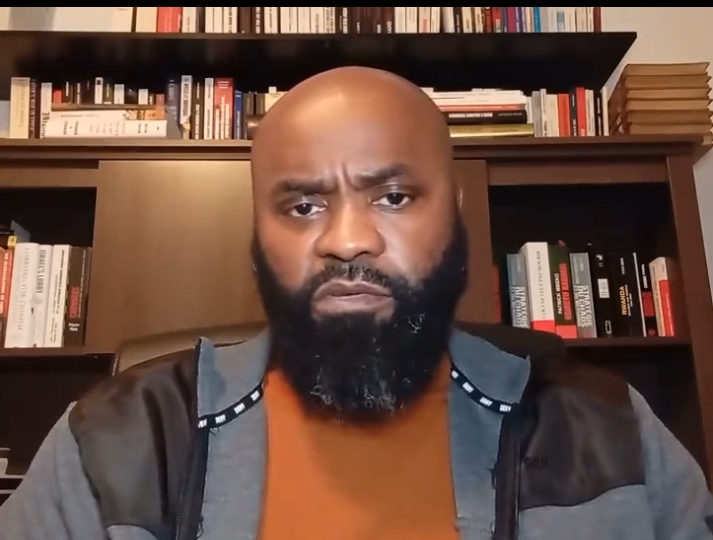
Just days before the Phnom Penh Summit, Kinshasa’s threat to withdraw from the International Organisation of La Francophonie (OIF) should Rwandan Louise Mushikiwabo be reappointed raises numerous questions. In his analysis, political scientist Patrick Mbeko invites us to look beyond the confrontation between Kinshasa and Kigali to measure the true diplomatic stakes of a potential breakup.
The battle for the Secretariat General of the International Organisation of La Francophonie is taking a particularly sensitive turn. The Democratic Republic of the Congo, supporting the candidacy of Juliana Amato Lumumba—daughter of the first Congolese Prime Minister, Patrice Emery Lumumba—finds itself in a diplomatic standoff with Rwanda over the succession of Louise Mushikiwabo.
According to information reported by Jeune Afrique and relayed by Agence France-Presse, Félix Tshisekedi reportedly informed French authorities that the DRC might leave the OIF if Louise Mushikiwabo is reappointed for a third term. This stance was notably discussed during his meeting with French Foreign Minister Jean-Noël Barrot on October 2 in Kinshasa.
It is against this backdrop that analyst Patrick Mbeko’s commentary becomes particularly compelling. The issue now goes beyond the mere designation of a Secretary General: it touches upon the Congolese diplomacy’s capacity to defend its interests without further compromising its presence in multilateral forums.
A Francophone Organisation Caught in Tensions Between Kinshasa and Kigali
Louise Mushikiwabo’s candidacy comes amid deeply deteriorated relations between the DRC and Rwanda. Kinshasa accuses Kigali of supporting the AFC/M23 rebellion in eastern Congo—accusations backed by UN expert reports and denied by Rwandan authorities.
For the Congolese government, seeing a Rwandan national retain the leadership of the OIF for a third term represents a particularly delicate diplomatic challenge.
Yet one question remains: how far can the DRC push this confrontation without weakening its own influence?
With its demographic weight and central role in African Francophonie, the DRC represents a major player in the organization. A potential withdrawal would therefore not be a minor decision. It could alter the internal balance of the OIF and reduce Kinshasa’s ability to defend its positions within the institution.
The Threat of Withdrawal: What Strategy for Congolese Diplomacy?
The question raised by this crisis centers on the effectiveness of a policy of rupture. Threatening to leave an international organization can serve as leverage for diplomatic pressure. However, this strategy also carries risks.
By leaving the OIF, the DRC risks losing an important platform to convey its demands, mobilize partners, and voice its stance on the security crisis in the Great Lakes region.
Conversely, remaining in an organization led by a figure from a country with which Kinshasa is in major diplomatic conflict could be viewed in certain Congolese circles as a political contradiction.
The real challenge lies in determining whether a withdrawal would serve as an effective means of pressure or ultimately deprive the DRC of an arena of influence it still retains.
Phnom Penh, a Decisive Summit
The upcoming Francophonie Summit, scheduled for November 15–16, 2026, in Phnom Penh, Cambodia, will decide between four candidacies: Louise Mushikiwabo for Rwanda, Juliana Amato Lumumba for the DRC, Coumba Ba for Mauritania, and Dacian Cioloș for Romania.
France, for its part, is reportedly seeking to avoid a rift between the OIF and the DRC, given the latter’s considerable demographic weight in the Francophone world.
Ultimately, this diplomatic sequence poses a fundamental question: should the DRC make its potential withdrawal from the OIF an absolute red line, or preserve its presence to continue influencing the organization’s decisions?
Patrick Mbeko’s analysis brings back to the center of the debate the issue of alignment between Congolese diplomatic ambitions, the defense of national interests, and the resources actually available to enforce them.
One thing is certain: the battle of Phnom Penh is not solely about who succeeds Louise Mushikiwabo. It is also a test for Congolese diplomacy and for the OIF’s capacity to preserve its unity amidst the geopolitical rivalries of its member states.
Redaction