The meeting between MONUSCO chief James Swan and former Congolese President Joseph Kabila in Goma marks a new stage in the UN mission’s consultations with political and military actors involved in the security crisis in eastern Democratic Republic of the Congo.
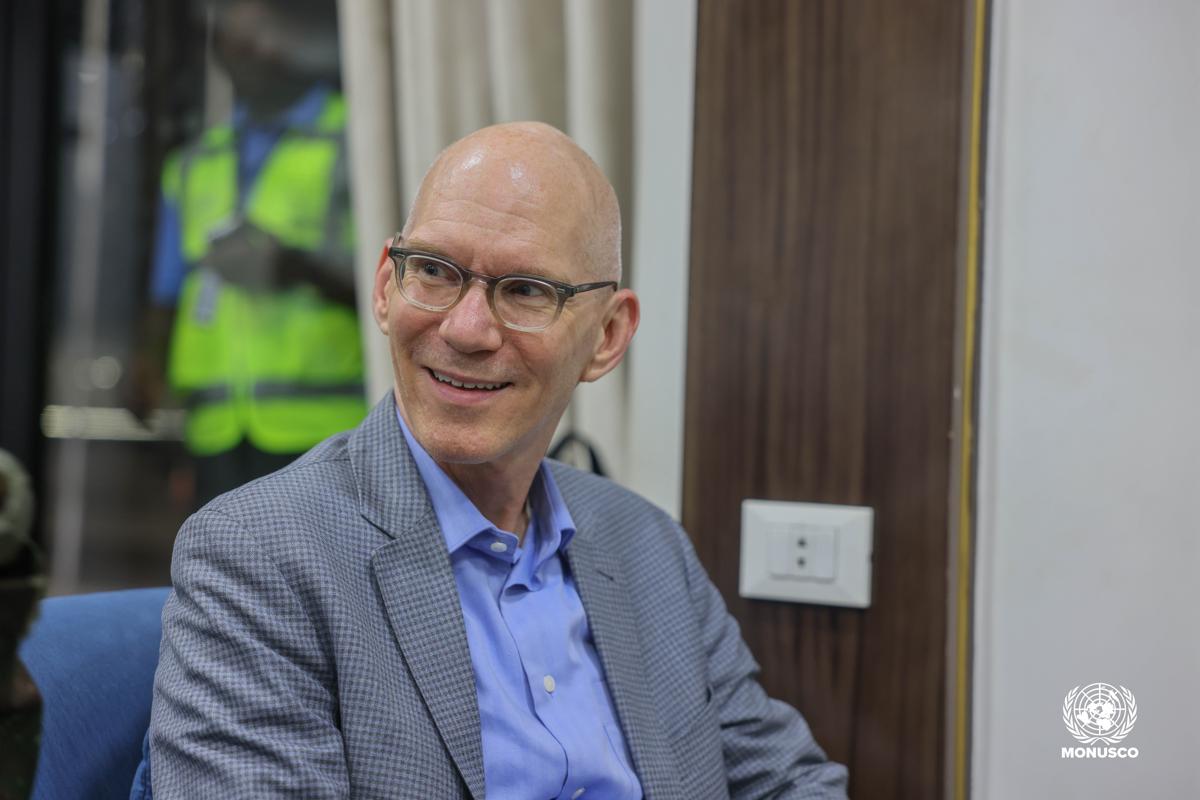
The United Nations is stepping up its consultations in eastern Democratic Republic of the Congo. On Tuesday, November 3, 2026, the Special Representative of the UN Secretary-General and Head of MONUSCO, James Swan, met former Congolese President Joseph Kabila in Goma, North Kivu Province. Kabila was presented as the leader of the politico-military movement known as the Front for the Refoundation of the Nation (FRN).
The meeting comes at a particularly sensitive time, marked by continued insecurity in eastern DR Congo and multiple diplomatic initiatives aimed at securing de-escalation of the conflict.
According to information reported by Radio Okapi, James Swan was accompanied by a MONUSCO delegation that included Brigadier General Givenz Kishombe Sichali, Senior Adviser Walter Lotze, and Marilyn Ngum Fru, Head of the DSRSG/PO Office.
Joseph Kabila, for his part, was accompanied by Corneille Nangaa and Bertrand Bisimwa, presented as FRN vice-presidents, as well as several military officers.
From AFC/M23 to FRN: A New Political and Military Configuration
One of the most significant aspects of this meeting is the change in the framework of MONUSCO’s consultations.
The UN mission, which had already maintained contacts with representatives of AFC/M23 as part of its mandate, is now continuing this approach with FRN leaders, described in Radio Okapi’s report as the structure that replaced the former coalition.
This development raises questions about the realignment of political and military forces in eastern DR Congo, as well as the role Joseph Kabila intends to play in efforts to resolve the crisis.
The former head of state, who governed the DRC for nearly two decades, is now at the center of a particularly delicate diplomatic sequence. His meeting with the head of MONUSCO could help clarify the positions of the various actors, although no specific political outcome from the discussions has been officially communicated in the available information.
MONUSCO Faces the Challenge of Monitoring the Ceasefire
Beyond its political dimension, the discussions fall within MONUSCO’s mandate, particularly the protection of civilians, facilitating humanitarian access, and supporting ceasefire monitoring and verification mechanisms.
Among these mechanisms is the Expanded Joint Verification Mechanism Plus (EJVM+), also known by its French acronym MCVE+.
This mechanism is responsible for investigating alleged ceasefire violations between the parties concerned, monitoring implementation on the ground, and assessing developments in the security and humanitarian situation in conflict-affected areas.
For the United Nations, maintaining communication channels with the various parties to the conflict is essential to preventing further escalation and encouraging compliance with ceasefire commitments.
Joseph Kabila: An Unavoidable Player in the Congolese Equation?
Joseph Kabila’s presence at this meeting gives the consultations an additional political dimension. The former president is no longer appearing solely in the Congolese political debate as a former head of state and opponent of Félix Tshisekedi’s administration. He is now also associated, according to Radio Okapi’s account, with a politico-military structure involved in the crisis in eastern DR Congo.
Several questions therefore arise: Is MONUSCO seeking to broaden its range of interlocutors in order to better understand the balance of power on the ground? Could Joseph Kabila play a role in a potential negotiating framework? And what place will be given to the government in Kinshasa in this new consultation process?
For now, it is important to distinguish between consultations conducted by MONUSCO and any potential political recognition of the FRN or an agreement to negotiate. The meeting alone does not mean that the United Nations endorses the demands or positions of its representatives.
One thing, however, remains clear: by meeting Joseph Kabila in Goma, James Swan is opening a new chapter in MONUSCO’s engagement with the actors involved in the Congolese crisis. It remains to be seen whether this initiative will help bring positions closer together or further expose the complexity of a conflict whose political, military, and regional dimensions continue to weigh heavily on the sovereignty and stability of the Democratic Republic of the Congo.
Redaction