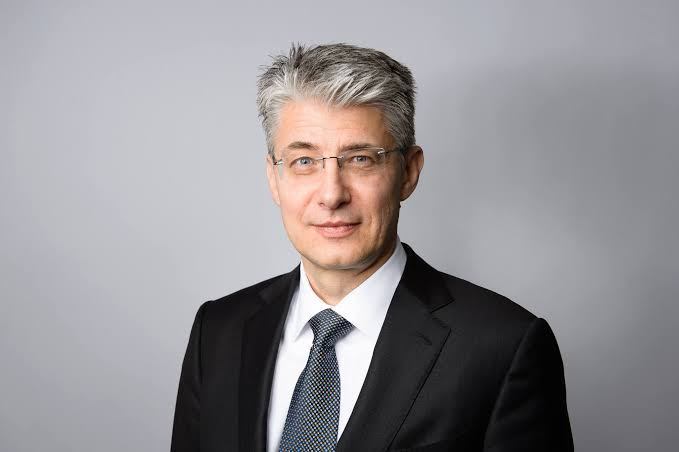
The legal battle between Morocco and Senegal over the AFCON 2025 final is taking on a new dimension. German arbitrator Ulrich Haas, a member of the three-arbitrator panel tasked with reviewing Senegal’s appeal before the Court of Arbitration for Sport (CAS), finds himself at the center of a controversy regarding his independence and impartiality.
At the root of this new dispute is an alleged phone exchange that reportedly took place on Sunday, November 22, 2026, between Ulrich Haas and Abdoulaye Fall, president of the Senegalese Football Federation (FSF). According to several media outlets, the Royal Moroccan Football Federation (FRMF) officially reported this incident to the CAS, believing it could raise serious questions about the arbitrator’s neutrality.
The report was also covered by Reuters, which noted, however, that it could not independently verify whether the call actually took place or determine the nature of the conversation.
Beyond this episode, Ulrich Haas’s career also brings back two legal precedents linked to his professional ties with the World Anti-Doping Agency (WADA).
In 2009, in the Alejandro Valverde case, the Spanish cyclist requested the recusal of the German legal scholar, then a member of the arbitral panel, citing his prior assignments with WADA. Haas had notably taken part in revising the World Anti-Doping Code in 2006–2007 and led an independent observer team for the agency at the 2004 Athens Olympic Games.
The issue raised by Valverde involved WADA’s status as a party to the proceedings while the arbitrator had previously worked with the institution. The recusal request was dismissed, however, by the International Council of Arbitration for Sport (ICAS). The Swiss Federal Tribunal also dismissed the appeal tied to this challenge in 2010.
In 2020, Ulrich Haas’s name reappeared in the dispute between WADA and the Russian Anti-Doping Agency (RUSADA). This time, he was acting as a legal expert for WADA. The Russian side and other interveners challenged his independence and asked for his report to be set aside.
There too, the arbitral panel dismissed the objections and found his independence sufficient to admit his report and testimony.
These two cases therefore do not constitute rulings establishing bias or professional misconduct by the German arbitrator. Still, they point to earlier challenges over his professional ties with an international sports body.
As for a third recusal proceeding attributed to him in 2023, the official information available does not, at this stage, make it possible to clearly establish its existence or circumstances.
A Question of Trust for the CAS
The recurrence of these controversies brings a fundamental question back to the table: what guarantees allow parties to trust the impartiality of arbitrators called upon to decide such sensitive sports disputes?
In proceedings between two national federations, even the slightest appearance of closeness between an arbitrator and one of the parties can undermine confidence in the process, even without proof of interference on the merits of the case.
CAS rules also provide recusal mechanisms when circumstances exist that could raise legitimate doubts about an arbitrator’s independence or impartiality.
For Morocco, the stakes now go beyond the interpretation of AFCON regulations alone. They also involve ensuring that the final decision is handed down under indisputable procedural conditions.
One point remains essential: Ulrich Haas’s precedents do not prove any corruption. Yet in a case as explosive as the Morocco–Senegal final, transparency regarding contacts between arbitrators and the parties is vital to preserving the credibility of international sports justice.
The CAS will therefore need to provide the necessary clarifications so that the anticipated ruling is not further challenged on grounds of impartiality.
- Swiss Federal Tribunal – Alejandro Valverde case, judgment 136 III 605: judicial document on the 2009 recusal.
- Arbitral award CAS 2020/O/6689 – WADA vs. RUSADA: handling of objections against Haas’s expert opinion.
- Reuters, November 24, 2026: FRMF report regarding the alleged phone call.
- Le Parisien – The Moroccan challenge surrounding the CAS arbitrator.
- Elbotola – Ulrich Haas’s professional precedents.
Redaction