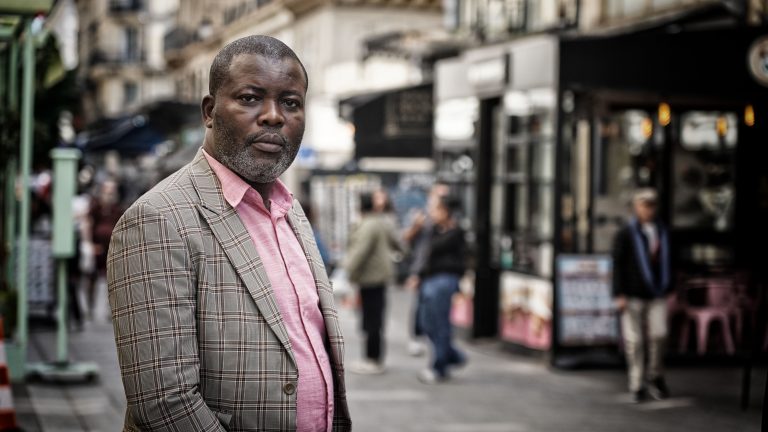
The war in the East, delays at the Electoral Commission, lack of funding, and an opportune debate on constitutional reform suggest that the Congolese president could remain in office beyond the current constitutional deadline. Christian Moleka, a political analyst at DYPOL, deciphers the different possible scenarios.
Afrikarabia: In 2028, general elections are scheduled to take place in the Democratic Republic of Congo (DRC), in which President Félix Tshisekedi is not authorized to participate under the current Constitution. In April 2025, the Electoral Commission (CENI) published its roadmap, but a year later, delays seem to be accumulating regarding electoral mapping, voter registration, and funding. Should we be concerned?
Christian Moleka: There are reasons to be concerned because, in principle, following the previous elections, we should have evaluated electoral reforms. To date, Parliament is completely silent. There is also nothing regarding the future of the CENI board, whose mandate expires in 2027. This is a board that emerged from the 2023 elections amidst disputes. If this board remains in place, it is supposed to organize the next elections. As of now, there is neither a debate on the future of the board nor on important reforms to the electoral process.
Specifically, there are questions regarding voter registration. The government has opted for a large-scale census that would allow the CENI to benefit directly from voter lists, avoiding the registration phase. But when looking at the operational complexity of such a census—with areas occupied by AFC/M23 rebels in the East and 7 million internally displaced persons—it seems technically impossible to complete this before 2028.
Afrikarabia: Does this mean we are heading towards a “glissement” (sliding/delay) of the electoral calendar?
Christian Moleka: Several factors point in that direction. First, the security situation. If the war persists and territories remain occupied, organizing a national vote becomes problematic. Second, the financial constraint. The government is struggling to mobilize the necessary funds for both the war effort and the elections.
Afrikarabia: Beyond a simple delay, there is more and more talk about a constitutional revision or even a change of Constitution. What is the objective?
Christian Moleka: The debate was officially launched by the UDPS (the presidential party). The stated goal is to “modernize” institutions, but the underlying objective is clearly to reset the presidential term counter to zero. If a new Constitution is adopted, it could allow Félix Tshisekedi to run for a “first” term under the new Republic, bypassing the current limit of two terms.
Afrikarabia: Is there a consensus within the ruling majority (Union Sacrée) on this issue?
Christian Moleka: Not entirely. We have seen some dissonant voices, like Modeste Bahati, who initially expressed reservations before being pressured to backtrack. There are internal power struggles. Some allies might prefer a transition or a successor, but the presidential camp is currently locking down the narrative to ensure that any scenario for 2028 involves Félix Tshisekedi.
Afrikarabia: What is the opposition’s strategy in this context?
Christian Moleka: The opposition remains fragmented. Moïse Katumbi, Martin Fayulu, and others are trying to mobilize, but they face a regime that has tightened its grip on institutions (the Constitutional Court, the CENI, and the security apparatus). The opposition’s main challenge is to create a common front against a potential third term or an indefinite delay of the elections.
*Note : Cette traduction est basée sur les points clés et extraits de l’entretien accordé par Christian Moleka à Afrikarabia (source originale relayée par Congo Virtuel Info).*