Long relegated to the role of mere supplier of raw materials, the Democratic Republic of Congo (DRC) is undergoing a strategic shift. Faced with Beijing’s overwhelming dominance in the exploitation of its cobalt, Kinshasa is multiplying its initiatives to regain control of this blue gold, essential to the global energy transition.
It’s an open secret: without the Democratic Republic of Congo, the global electric vehicle revolution simply wouldn’t happen. The Congolese subsoil holds nearly 70% of the world’s cobalt reserves, a critical mineral used in the composition of lithium-ion batteries. Yet, this geological bounty has so far brought very little benefit to the local economy, with the added value flying far beyond national borders, primarily to Asia.
The Grip of the Chinese Dragon
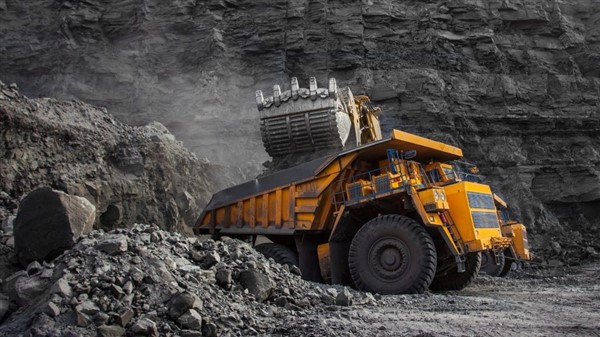
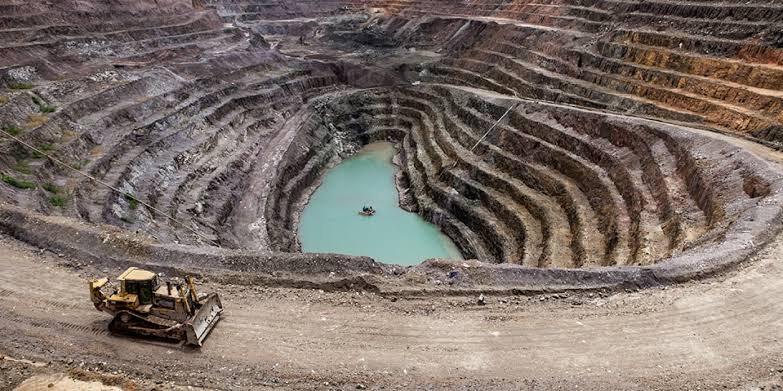
Over the past two decades, China has methodically woven its web in the Katanga copper and cobalt belt. Through bilateral agreements (the infamous 2008 “minerals-for-infrastructure” deal) and massive acquisitions of mining concessions from Western companies, Chinese giants like CMOC and Huayou Cobalt have taken control of the vast majority of Congolese industrial mines.
Even more than extraction, it is refining that ensures Beijing’s dominance: almost all of the Congolese raw cobalt is shipped to China for processing, giving the Middle Kingdom a de facto monopoly on the global battery supply chain.
Kinshasa’s Awakening
But the situation is changing. Aware of its geopolitical weight at a time when Western countries are desperately seeking to secure and diversify their supplies, the Congolese administration has decided to revise the rules of the game.
The DRC government has launched a major offensive to rebalance these partnerships, which it considers exploitative. Kinshasa has notably imposed the renegotiation of the Sicomines agreement (the Sino-Congolese joint venture), demanding significantly larger investments in national infrastructure and a fairer distribution of dividends for the Congolese state. The DRC is now pushing for mining contracts to include a local processing requirement. The objective is clear: to stop exporting raw ore and start producing battery precursors on Congolese soil in order to capture a share of the added value.
Cleaning up and structuring artisanal mining
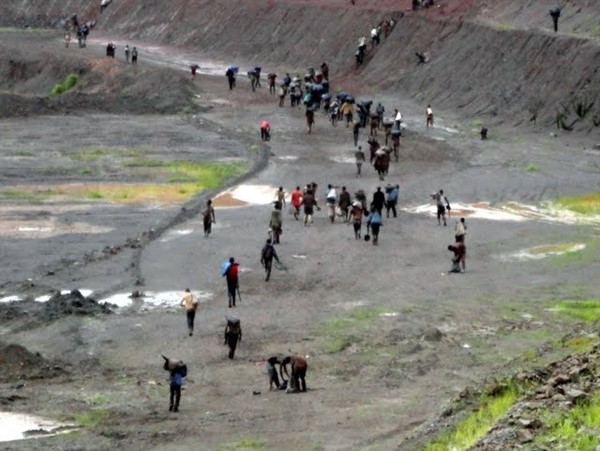
The other major undertaking in this reconquest concerns the artisanal mining sector, which accounts for up to 20% of national cobalt production. Often criticized for its appalling working conditions and child labor, this informal sector escaped state control and largely benefited unscrupulous intermediaries, often linked to Asian export networks.
To address this, the DRC is seeking to strengthen the role of the General Cobalt Company (EGC), a state-owned entity intended to hold a monopoly on the purchase and marketing of artisanal cobalt. By guaranteeing ethical standards (traceability, safety) and fair prices, Kinshasa hopes not only to improve the image of its cobalt on the international market but also to dismantle smuggling networks.
A New Geopolitical Landscape
The DRC is skillfully leveraging global geopolitical tensions. By demonstrating its desire to break free from Chinese influence, it is attracting the attention of the United States and the European Union. Keen to reduce their dependence on China, these countries are increasing diplomatic visits and promises of strategic partnerships to support the development of a local value chain (such as the Lobito Corridor infrastructure development project).
The road ahead is still long for the DRC, hampered by infrastructure challenges, a business climate often considered complex, and a lack of available energy. However, the momentum has begun: Congo no longer wants to be a mere playground for superpowers, but a sovereign and essential player in the global energy transition.
Aimé Binda