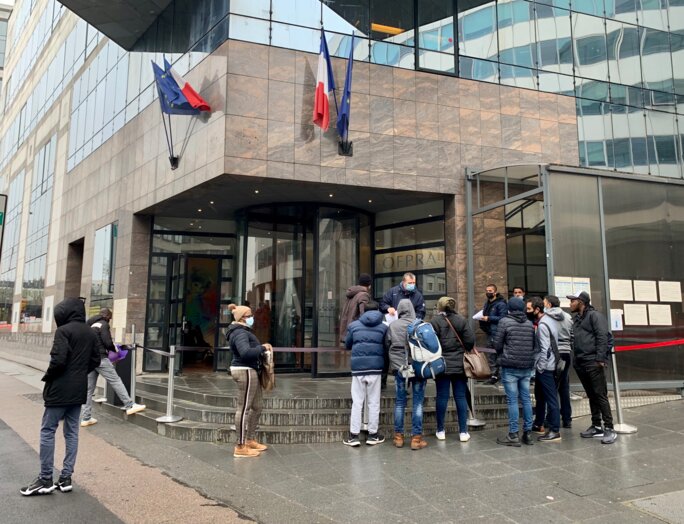
The Nantes court rejected the application for French citizenship of a Rwandan national who worked as an interpreter for the French Office for the Protection of Refugees and Stateless Persons (OFPRA) due to espionage on behalf of the Rwandan National Intelligence and Security Service (NISS)
The OFPRA interpreter was working for Rwandan intelligence.
On March 20, 2026, the Nantes administrative court rejected the application for French citizenship of a Rwandan national who worked as an interpreter for OFPRA.
This decision is heavily based on a white paper from the DGSI (French Directorate General for Internal Security), dated September 2024.
The white paper revealed that the individual had used his position at OFPRA to carry out missions for the Rwandan National Intelligence and Security Service (NISS).
His role gave him privileged access to sensitive information concerning Rwandan asylum seekers—people he was officially tasked with assisting—many of whom were dissidents or political opponents of the Kigali government. The data collected was passed on to Rwandan intelligence services to monitor and potentially repress opponents in exile.
The white paper indicates that he was an active agent of the Rwandan intelligence services “at least until 2019.”
During three separate interviews with the DGSI between late 2017 and mid-2022, the applicant allegedly made “contradictory and false statements” regarding his continued ties with the Rwandan authorities. Although represented by lawyer Stanic Adjacostan, the individual in question did not contest the specific allegations contained in the September 2024 “white paper.” This report formally established his connection to the National Intelligence and Security Service (NISS), the Rwandan intelligence service, and accused him of using his position as an interpreter for the French Office for the Protection of Refugees and Stateless Persons (OFPRA) to monitor Rwandan asylum seekers in France.
Under French administrative law, the absence of any challenge to such findings often allows the court to accept the intelligence services’ conclusions as established facts. This lack of opposition, combined with his interviews deemed insincere between 2017 and 2022, led the court to conclude that he did not possess the required loyalty to France to obtain naturalization.
Coco Kabwika