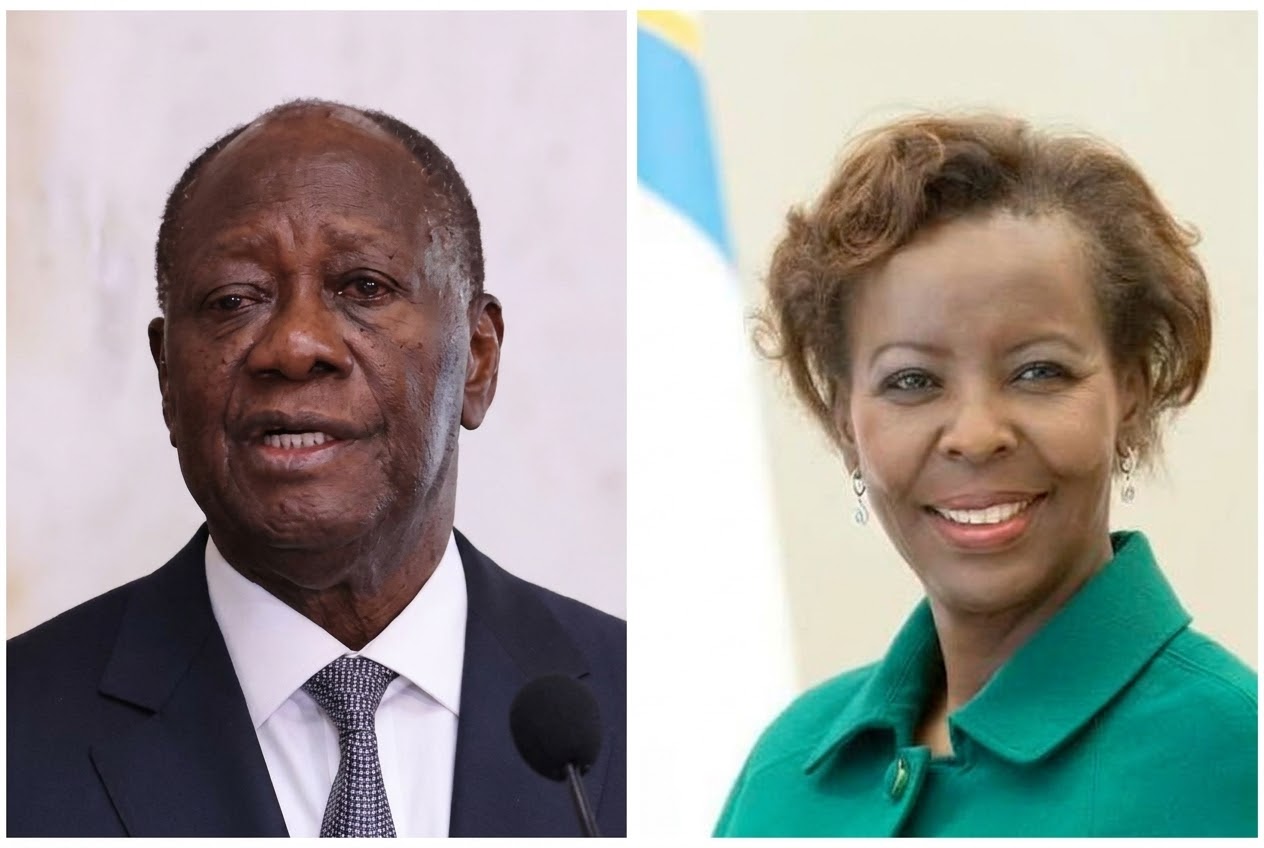
While several Francophone capitals—including Paris and Kinshasa—worked behind the scenes to rule out the option of a third term in order to prevent an implosion or the withdrawal of the DRC, Ivorian President Alassane Ouattara maintained his support for Louise Mushikiwabo.
This stance was in keeping with the strong bilateral relations between Abidjan and Kigali. Notably, the outgoing Secretary-General had traveled to Côte d’Ivoire several times to prepare for the summit alongside the Ivorian head of state. President Alassane Ouattara’s diplomacy—particularly through his personal representative to the OIF, Maurice Kouakou Bandaman—worked to consolidate the modernization and good governance reforms initiated by Louise Mushikiwabo since 2018. However, this backing sparked tensions among other African and Francophone delegations seeking a consensus alternative.
To prevent a fracture within the organization—as the DRC had prepared a statement announcing its immediate withdrawal should Louise Mushikiwabo be re-elected—Kinshasa agreed to withdraw its own candidate, Juliana Lumumba, to foster consensus around former Romanian Prime Minister Dacian Cioloș. Paris, for its part, pressured Kigali to secure the withdrawal of the outgoing Secretary-General, leading to a particularly heated exchange behind closed doors between Emmanuel Macron and Paul Kagame.
Abidjan’s Support for Kigali
Running counter to this momentum, Ivorian President Alassane Ouattara—alongside his Djiboutian counterpart Ismaïl Omar Guelleh—maintained steadfast support for Louise Mushikiwabo and Rwanda. This posture is explained by the strength of the bilateral axis between Abidjan and Kigali, as well as the personal closeness between the Ivorian head of state and the outgoing Secretary-General.
Frustration Among African Mediators
This unconditional support caused sharp friction among other African delegations (notably Senegal, Benin, and Togo), which were attempting to avoid a confrontational vote and advocating for a prior reform of the electoral rules.
This episode has nonetheless left lasting diplomatic marks. By signaling its alignment with Kigali against the front led by Kinshasa, Paris, and the organization’s main financial backers (France, Canada, Belgium), Abidjan risked appearing out of step with the pursuit of a collective compromise within the Francophone sphere.
Redaction


